
The epoxy resin dining table, built to be sat at
A dining table is the most used surface in a home, so an epoxy resin dining table has to be more than beautiful — it has to seat the right number of people in comfort and take everyday life without flinching. Here is how we proportion, build and finish one to do exactly that.

Seating, proportion and the numbers that matter
Before colour or wood, a dining table is a geometry problem. Each diner needs roughly 60 cm of width along the edge to sit comfortably, and a usable depth of around 90 cm keeps two place settings from colliding across the middle. From there the seating count falls out:
- Six — about 180 cm long; the most versatile size for a private dining room.
- Eight — around 220–240 cm, with room for two at the ends; the size most of our clients ask for.
- Ten and beyond — 280 cm and up, where a single uninterrupted slab becomes a genuine event and the base has to be engineered, not just chosen.
A large dining table also needs clearance: leave 90–100 cm between the edge and the nearest wall so chairs pull out and people pass behind them. We size every piece to your actual room, not a catalogue, and confirm the footprint before a single board is cut.
River dining table or fuller pour?
How much resin meets how much wood is the decision that sets a dining table's whole character. A river dining table keeps a seam of cast resin running between two live-edge slabs — the timber dominates, the resin reads as water. It is the quieter, more architectural choice, and the one we used on Strata, our sea-glass river slab in walnut.
A fuller pour inverts that balance: islands of figured wood suspended in a larger field of tinted resin, or a full-width band that becomes the table's main subject. Both are sound for daily dining, but they behave differently:
- River seam — more wood movement to accommodate, a warmer surface underhand, grain you read end to end.
- Fuller pour — more resin on show, a cooler, glassier touch, and colour as the headline.
If you are still weighing the form itself, how a river table is made walks through it slab by slab.
Choosing wood for a surface you eat off
A dining top earns its keep daily, so we favour dense, stable, figured hardwoods that take a fine finish and resist the small abuses of a table in use. A walnut dining table is the classic for good reason — burled walnut swirls richly around a resin seam, hides minor marks in its figure, and deepens with age. Where a client wants something sharper we reach for the alternatives:
- Walnut (and walnut burl) — warm, forgiving, endlessly flattering to colour.
- Ziricote — dark ink-line grain, formal and graphic.
- Macassar ebony — striped and dramatic, a statement surface.
- Olive — pale, dense and wild-grained, beautiful under a clear or sea-glass river.
We buy these as whole flitches and rest them for years, so the slab in your table has already finished most of its moving before we ever pour. Our full wood guide goes deeper into how each species reads.
Daily durability — heat, spills and scratches
Tables that crack or warp almost always trace back to an unstabilised slab or a rushed pour; because we rest and stabilise whole flitches and pour in controlled lifts, a properly made top settles into a hard, stable surface that lasts decades.
A cured epoxy surface is genuinely tough, but it has one honest limit worth understanding: heat. Cured resin softens well below the temperature of a hot pan or a just-boiled teapot, so a trivet is non-negotiable for anything straight off the stove. A warm dinner plate or a glass of wine does nothing at all.
- Spills — wine, oil, citrus and coffee wipe away with a soft, damp cloth; the sealed surface is non-porous, so nothing soaks in if you catch it the same day.
- Scratches — the resin is harder than the wood around it; everyday cutlery and crockery won't mark a properly finished top, though dragging ceramic across it will eventually dull the polish.
- Light — we use UV-resistant systems, but prolonged direct sun ages any resin, so we steer a dining table away from a south window where we can.
None of this is fussy — it is the same care any fine surface wants. We cover it in full in caring for a resin table, and we hand over written guidance with every order.
Bases that hold a dining top still
A dining table's base does invisible structural work: it has to carry a heavy slab dead-level across a wide span, leave legroom clear for everyone seated, and stay rigid when people lean. The longer the top, the more this matters — past about 240 cm, a base is engineered for deflection, not just styled.
We build to suit the piece and the room:
- Blackened or patinated steel — slim trestles or a single sculptural plinth, where the top is the hero.
- Solid timber — matched or deliberately contrasted with the slab, for a warmer, more traditional read.
- Cantilevered and pedestal forms — when you want unbroken legroom and chairs that tuck fully under.
Every base is detailed so the wood can still move seasonally without cracking the top or racking the frame — fixings that hold firmly but let the slab breathe.
Made to order, delivered worldwide
Every dining table we make is one of one: sized to your room, drawn around a slab chosen for you, and poured in a single session with a pigment we mix once and never repeat. A custom dining table order runs six to twelve weeks, and begins with a conversation about how you live and dine, not a spec sheet.
We make to order in Egypt and deliver worldwide — to private residences, yachts and hospitality projects — crating each piece to survive the journey and arrive ready to seat your table. If cost is on your mind, what drives a river table's price sets out the honest levers; when you are ready to order a piece of your own, start the conversation and we reply within two working days.
From the catalogue
Pieces from the atelier in this direction — each made to order, each with its own page.
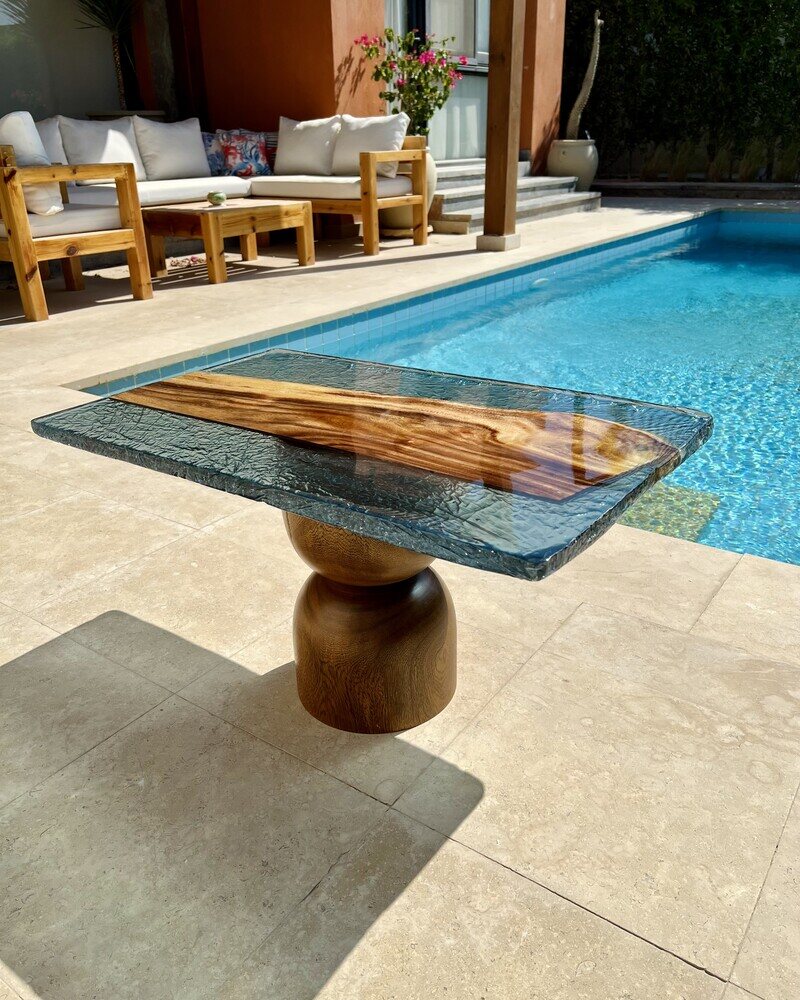
Strata
A single slab, held in still water — cast resin and walnut.
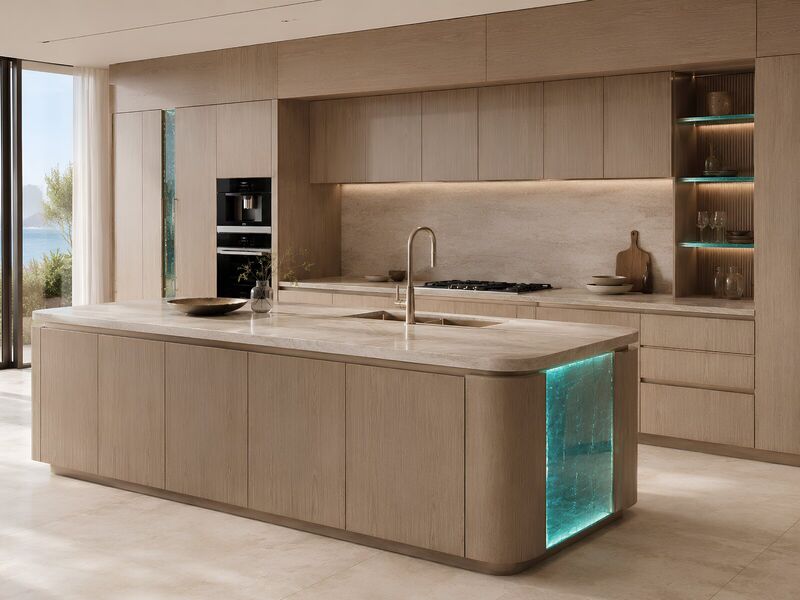
Halcyon
A kitchen lit from within — backlit turquoise cast resin on the Red Sea.
See the catalogue → · Each piece is one of a kind, priced on request — the honest cost breakdown is in what a river table costs.
Common questions
How big should an epoxy resin dining table be to seat eight?
Around 220–240 cm long by 90–100 cm deep seats eight comfortably, allowing two diners at the ends. Each place setting wants roughly 60 cm of edge, and you should leave 90–100 cm of clearance to the nearest wall so chairs pull out freely.
Is an epoxy dining table durable enough for everyday use?
Yes. A properly cured, sealed epoxy top is non-porous and harder than the wood around it, so spills wipe off and normal cutlery and crockery won't mark it. The one real limit is heat — always use a trivet for anything straight off the stove, as cured resin softens below a hot pan's temperature.
Can you put hot pans or plates on a resin dining table?
Warm dinner plates and drinks are fine, but never place a hot pan, pot or just-boiled teapot directly on the surface. Cured epoxy softens well below those temperatures, so a trivet is essential for anything coming straight off heat.
Do epoxy dining tables crack, warp or last?
Movement and cracking come from unstabilised slabs and poorly managed pours, not from epoxy itself. We rest and stabilise whole flitches before they ever reach the bench, and pour in controlled lifts so the resin sets without stress — so a properly made table is a hard, stable surface that lasts decades.
What is the difference between a river dining table and a full epoxy pour?
A river dining table keeps a seam of resin running between two live-edge wood slabs, so timber dominates and the resin reads as water. A fuller pour shows more resin — wood islands or a wide band suspended in colour — giving a cooler, glassier surface where the resin is the main subject.
What is the best wood for a walnut dining table with resin?
Burled walnut is the most popular for its warm figure, forgiving surface and the way it deepens with age. Ziricote, macassar ebony and olive are excellent alternatives when you want sharper grain or a paler, more dramatic top. We buy all of them as whole flitches and rest them for years before pouring.
Do you deliver custom dining tables outside Egypt?
Yes. We make to order in Egypt and deliver worldwide to private residences, yachts and hospitality projects, crating each piece to arrive safely. A custom dining table order runs six to twelve weeks from the first conversation.
Order yours
Every piece we make is one of one — shaped around your space and a slab chosen for you. An order runs six to twelve weeks and begins with a conversation; we reply within two working days.