
The best wood for a river table
A river table is only as good as the slab it is built from. Choosing the best wood for a river table means reading colour, figure and stability together — then committing to one whole flitch.

What makes a slab right for a river
Before any single species, three properties decide whether a board will make a beautiful river — and they matter more than the name on the label.
- Contrast. The wood is the river bank. Dark, figured timber reads as land against the light of the resin; pale, even boards flatten that contrast and the river stops looking like water.
- Edge. The natural, bark-shaped edge — the live edge — is what the resin pours against. A slab with a generous, undulating edge gives the river its movement; a sawn straight edge gives you a stripe.
- Stability. The board must be dry and settled, or it will move after the pour and stress the bond. We buy timber as whole flitches and rest it for years before a saw touches it.
Get those three right and the species becomes a question of character rather than performance. For the full picture of how the two meet, see river tables, explained.
Walnut: the river table default, for good reason
If there is a single best wood for a river table, most makers would say walnut — and we would not argue. A walnut river table sits in a register of warm chocolate-browns shot with violet and grey, a colour that flatters almost any resin, from clear sea-glass to a saturated turquoise or red.
The reason to reach beyond plain walnut is burl. Burled walnut swirls, eyes and knots crowd up against the seam, so the river looks as though it has carved its banks over centuries. Crotch figure — cut from where the trunk forks — gives a feathered, flame-like grain that mirrors across the pour.
Walnut is also forgiving to work and finishes to a deep, oiled glow. It is stable once dry and takes our oil and lacquer coats without fuss. Our piece Strata sets a sea-glass cast-resin river in walnut; Carmine sets a red river in burled walnut. For the species-by-species long view, see this guide alongside live-edge slabs and whole flitches.
Ziricote and macassar ebony: ink-line drama
When a client wants the wood itself to do something theatrical, we turn to two figured exotics.
A ziricote table is unmistakable. The grain draws fine, near-black lines that pool and web across a grey-brown ground — figure that looks, fittingly, like a landscape seen from the air, or a riverbed under shallow water. Against a smoked or clear resin it is hard to better.
Macassar ebony is the formal cousin: dense, dark chocolate-and-black stripes that run straight and proud, like a pinstripe suit. It frames a river with architecture and discipline rather than wildness, and suits a long, restrained dining piece.
Both are oily, heavy hardwoods. That density makes them stable and lustrous, but the natural oils must be wiped and the surface keyed before pouring, or the resin can struggle to bond at the edge. Done properly, the join is invisible and permanent. These woods carry a price premium — see what a river table costs for the drivers.
Olive: light, but with movement to spare
Olive is the exception to the dark-wood rule, and a deliberate one. An olive wood table trades deep contrast for sheer animation: golden, honeyed tones streaked with caramel and grey, and a wild, chaotic grain that changes direction every few centimetres.
Because olive is paler, it asks for a resin that supplies the contrast the wood does not — a saturated colour, a smoky tint, or a touch of metal-leaf in the pour. Get that balance right and the result is luminous and Mediterranean rather than dark and dramatic; an olive board set against a saturated turquoise pour works to exactly this end.
Olive grows as small, gnarled trees, so large clear boards are rare and the most interesting slabs are modest in size — better suited to a coffee or centre table than a banquet dining top. It can be lively as it dries, which is precisely why the years of resting before the first cut matter so much.
How the slab decides the form
Choosing wood for an epoxy table is not only about colour. The slab in front of us shapes what the table can become.
- Bookmatched pair. Two boards from the same trunk, opened like a book, give a symmetrical river down the centre — the classic dining-table gesture. Explore that in epoxy dining tables.
- Single live edge. One slab with resin run along one bank reads quieter and more sculptural — at home as a coffee table or console.
- Figure placement. A burl cluster or a fork in the grain is a focal point; we orient the slab so it falls where the eye lands, not where the timber happened to be cut.
This is why we buy whole flitches rather than pre-cut boards: keeping every slice from one trunk together lets us match, mirror and place the figure deliberately. The wood comes first; the resin is chosen to serve it.
Sourcing, and starting yours
Every species here is bought as a whole flitch — the entire trunk, sawn through and kept in sequence — then rested for years until it is fully settled. That patience is what lets us promise a table that will not move on you after it leaves the atelier.
The honest answer to which is the best wood for a river table is that it depends on your room, your light and the river you want. Walnut for warmth, ziricote for drama, macassar for discipline, olive for luminosity — we will walk a flitch with you and choose the board, not just the species.
Tell us about the piece and the space it will live in and we will propose slabs and a river to suit. An order runs six to twelve weeks; we reply within two working days. Start the conversation, or see finished work in our catalogue.
From the catalogue
Pieces from the atelier in this direction — each made to order, each with its own page.
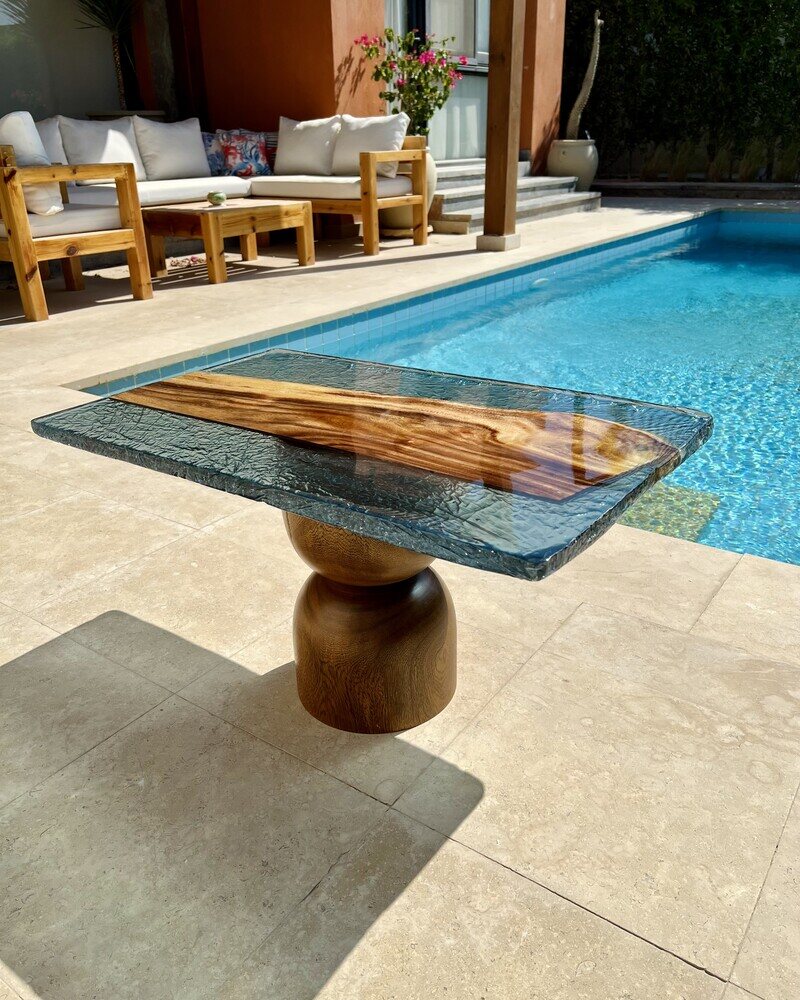
Strata
Sea-glass cast resin against walnut — the classic pairing.
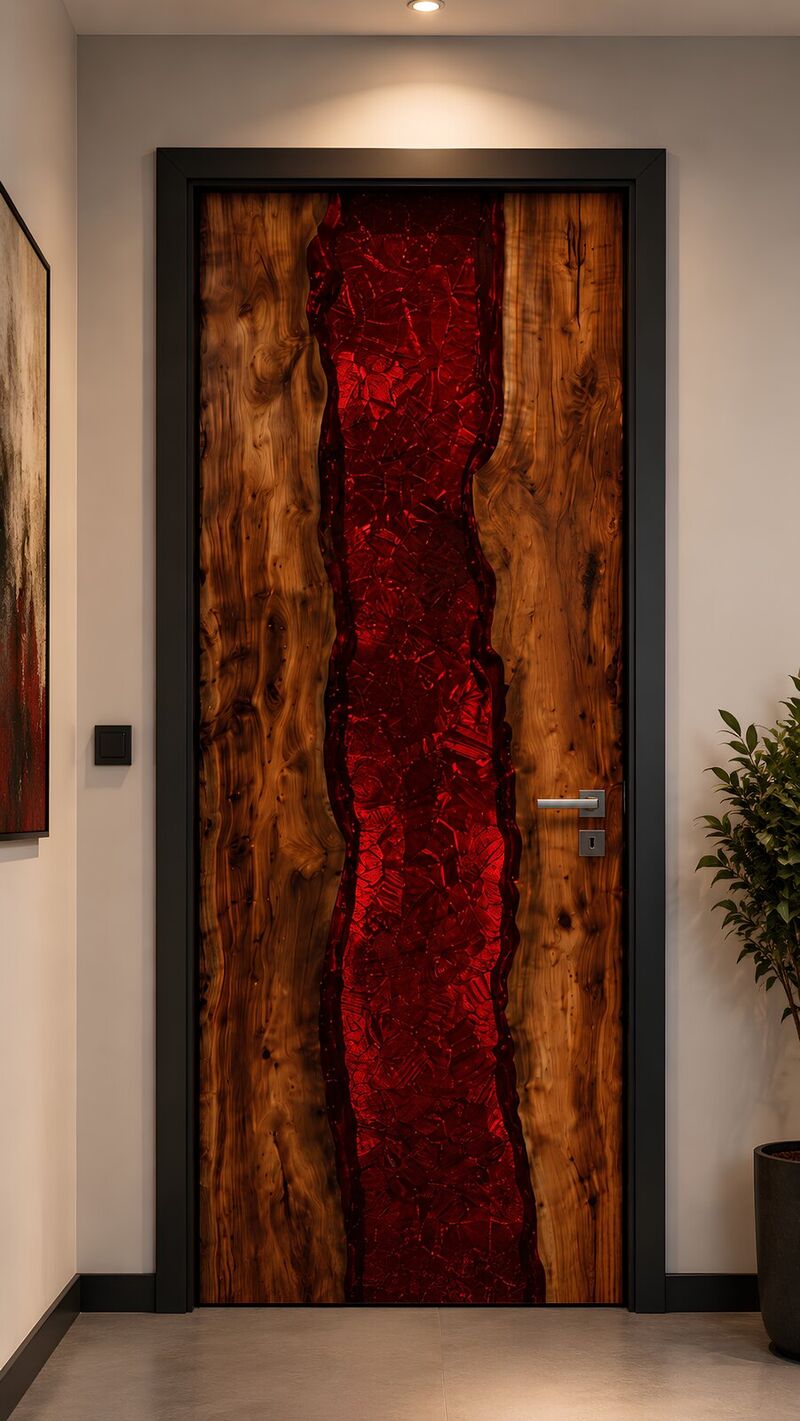
Carmine
A red cast-resin river through burled walnut, hinged.
See the catalogue → · Each piece is one of a kind, priced on request — the honest cost breakdown is in what a river table costs.
Common questions
What is the best wood for a river table?
Walnut is the most popular and the safest choice — its warm, dark, figured grain frames almost any resin colour beautifully. Ziricote and macassar ebony offer more drama, while olive suits a lighter, Mediterranean look. The best wood ultimately depends on your room, your light and the river you want.
Is walnut good for a river table?
Yes — walnut is the classic choice. It is stable once dried, easy to finish to a deep glow, and its chocolate-and-violet tones flatter clear, smoked and saturated resins alike. Burled walnut adds swirling figure right at the river's edge.
What is special about a ziricote table?
Ziricote has a distinctive figure: fine near-black grain lines that pool and web across a grey-brown ground, often described as looking like a landscape from the air. Against clear or smoked resin it makes one of the most striking river tables possible.
Can you use light wood like olive for an epoxy table?
Yes, but pair it with a tinted or saturated resin to supply the contrast the pale wood does not. Olive's golden tone and wild grain make a luminous table; just expect smaller slabs, since olive trees rarely yield large clear boards.
Why source whole flitches instead of pre-cut boards?
Buying the whole flitch keeps every slice from one trunk in sequence, so we can bookmatch, mirror and place the figure deliberately. It also lets us rest the timber for years until it is fully stable, which protects the bond between wood and resin.
Does the wood affect what a river table costs?
Yes, significantly. Rare figured species like macassar ebony and ziricote, and large clean walnut burl slabs, carry a premium over plainer boards. Wood is one of the main cost drivers — see our guide to what a river table costs for the full picture.
Order yours
Every piece we make is one of one — shaped around your space and a slab chosen for you. An order runs six to twelve weeks and begins with a conversation; we reply within two working days.
Start the conversation WhatsApp the atelier Email the studio See the catalogue