
Bespoke yacht furniture in cast resin and rare wood
Bespoke furniture for yachts and superyachts — cast-resin tables, panels and dividers built to take weight, motion, salt and humidity in their stride. Made to order in our Red Sea atelier and installed worldwide, in step with your designer or refit yard.

Why resin and rare wood belong at sea
A yacht interior asks more of a surface than a house ever does. It must hold its colour under hard light off the water, shrug off salt-laden air, and stay sound through years of motion and humid passages. Cast resin and rested rare wood answer that brief unusually well.
Cured epoxy resin is dimensionally stable, non-porous and effectively waterproof — it does not absorb the moisture that swells lesser materials, and a sealed top wipes clean of salt spray. Bedded into a stabilised rare-wood frame, it gives a feature surface with real presence rather than a laminate facsimile. Because we buy timber as whole flitches and rest it for years before cutting, the wood reaching your vessel has already done most of its moving. The result is marine furniture that reads as art and behaves as engineering. See our guide to resin tables for how the surfaces are built.
Engineered for weight, motion and salt
Custom furniture for yachts lives within tight constraints, and we design to them from the first sketch rather than retrofitting later. Three pressures shape every piece.
- Weight. Every kilogram is accounted for in trim and load. We tune slab thickness, resin volume and substrate so a table earns its place without ballast surprises, and we share weights early for the yard's calculations.
- Motion. A sea state is not a dining room. Bases are widened and lowered for stability, centres of gravity kept down, and edges eased so nothing becomes a hazard when the vessel rolls.
- Salt and humidity. Resin is degassed under vacuum for a flaw-free, sealed surface, the wood is finished in marine-suitable oil or lacquer, and any metalwork is specified in corrosion-resistant stainless.
The difference shows in the detail. Here is how a standard piece of furniture compares with the way we build for a vessel.
| Detail | Standard furniture | ASK marine build |
|---|---|---|
| Weight and balance | Made to look right, weighed after the fact | Slab thickness, resin volume and substrate tuned to the trim envelope; weights shared early for the yard |
| Salt and humidity resistance | Porous timber and open joints that swell and stain | Non-porous degassed resin, sealed top and marine-suitable oil or lacquer that wipe clean of salt |
| Fixing for motion | Sits loose on the floor | Concealed deck-bolt plates, recessed leg sockets or hidden bracketry, detailed with your yard |
| Edge safety | Square corners at hip height | Eased edges, low centre of gravity and optional raised lips to contain glassware under way |
| UV/sun treatment | Colour fades under hard light off the water | Stabilised tint and a sealed surface chosen to hold colour in marine light |
This is the same discipline behind Levante, our turquoise-to-gold resin divider built with a steel armature to travel and hold true.
Fixings and stability under way
On land a beautiful table can simply sit on the floor. At sea it has to stay put through a beam swell, so fixing is part of the design, not an afterthought. We engineer pieces to integrate with a yacht's systems rather than fight them.
Depending on the room and the yard's preference, that can mean concealed deck-bolt plates, recessed sockets for removable legs, fiddle rails worked into the resin edge, or hidden bracketry that locks a panel to a bulkhead — the same approach we use for feature walls and dividers ashore. Tops can be specified with subtle raised lips to contain glassware, and removable elements keyed so they seat the same way every time. We detail all of it in coordination with your captain, designer or refit yard, supply fixing drawings for sign-off, and build to whatever stability standard the project is working to. The aim is furniture that feels solid in any sea and still lifts out cleanly for service or storage.
Tables, panels, dividers and feature surfaces
Most of what a yacht needs from us is a small number of pieces that carry the whole interior. We make each one to order, drawn around the exact space and the way the room is used under way.
- Dining and cocktail tables — cast-resin river tops in figured walnut, ziricote or olive, sized to the saloon and weighted low.
- Wall and ceiling panels — feature surfaces and headboards in tinted resin and rare wood, like the pale-green wall of our Ondine order.
- Dividers and folding screens — room separators and privacy screens such as Vanta, our black folding screen with amber resin, and Levante's steel-and-resin divider.
- Pivot doors and thresholds — statement entries in the spirit of Carmine, our red-resin pivot door in burled walnut.
For wall-mounted work, see our feature walls, screens and pivot doors; for the dining centrepiece, our epoxy dining tables.
Working with designers and refit yards
We are comfortable as a specialist supplier inside a larger team. Whether you are an owner with a clear vision, a yacht interior design studio with a finished spec, or a refit yard fitting a tight window, we slot into your process and your drawing set.
An order begins with a conversation about the space, the brief and the constraints — proportions, weight envelope, fixing strategy and the look you are after. From a floor plan or general arrangement we propose a species chosen for its figure and a resin tint mixed once, for your vessel alone and never repeated. We then issue weights, sections and fixing details for the yard to sign off before a single pour. Throughout, we work remotely by video, drawings and photographs, and reply to inquiries within two working days. If you are choosing materials, our wood selection guide and epoxy vs resin explainer are good places to start.
Lead time, worldwide delivery and install
A bespoke piece runs six to twelve weeks, and most of that is the material setting its own pace — timber rested for years, a single uninterrupted pour, then roughly three weeks of curing before the first cut. We plan backwards from your refit or delivery date so the work meets the schedule rather than chasing it.
We are made to order in Egypt and delivered worldwide, including directly to vessels and yards in the Mediterranean, the Gulf and beyond. Shipping, crating and on-site installation are arranged as part of the order, coordinated with your yard's access and lift constraints. Cost follows the work, not a fixed list — the drivers are the rarity and size of the flitch, the resin volume, the complexity of the form, the fixing engineering and the install. We quote each order to its drawing; our guide to what a river table costs sets out the ranges honestly. When you are ready, start the conversation.
From the catalogue
Pieces from the atelier in this direction — each made to order, each with its own page.
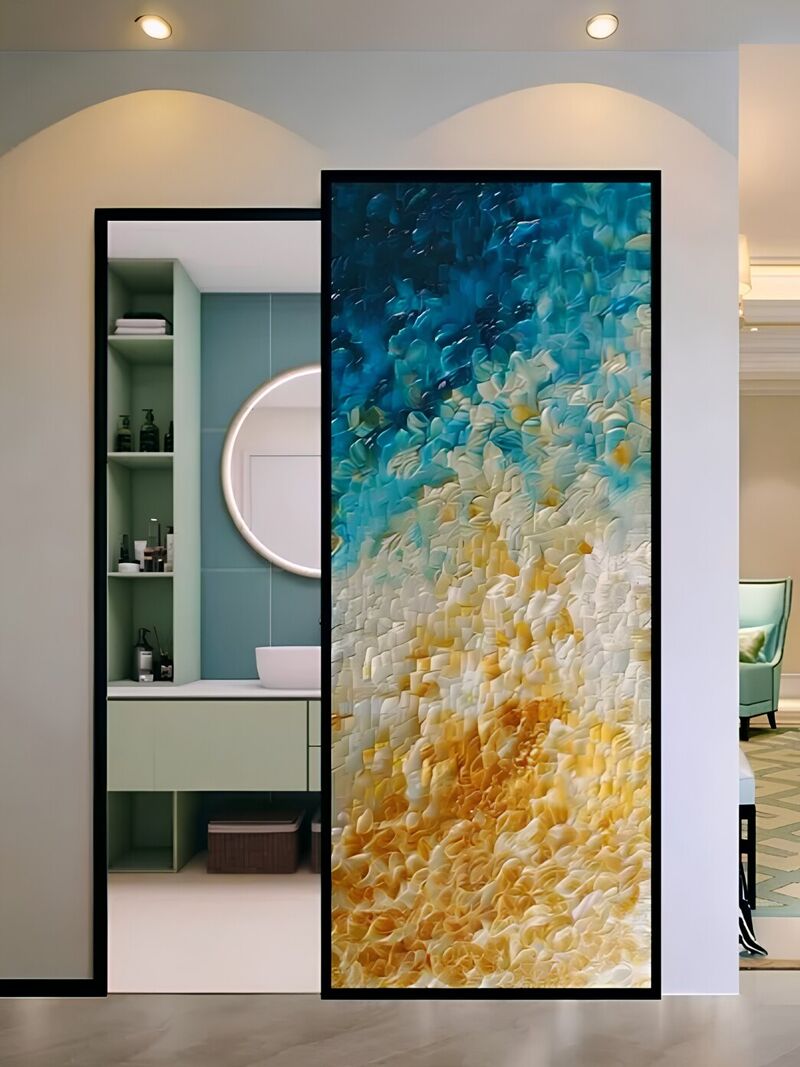
Levante
A steel-armature resin divider built to travel and hold true.

Vanta
Four panels, four kilograms — light enough for a saloon.
See the catalogue → · Each piece is one of a kind, priced on request — the honest cost breakdown is in what a river table costs.
Common questions
Is resin furniture suitable for a marine environment?
Yes. Cured epoxy resin is non-porous, dimensionally stable and effectively waterproof, so it resists the salt air and humidity that affect lesser materials. We seal the surface, finish the wood in marine-suitable oil or lacquer, and specify any metalwork in corrosion-resistant stainless steel.
How do you keep furniture stable in a sea state?
Stability is designed in from the start. We widen and lower bases, keep the centre of gravity down, ease edges, and integrate fixings — concealed deck-bolt plates, recessed leg sockets or hidden bracketry — coordinated with your yard. We also supply fixing drawings for sign-off before building.
Can you work to a yacht's weight constraints?
Yes. Weight is accounted for from the first sketch. We tune slab thickness, resin volume and substrate to the trim envelope and share weights early so the yard can run its calculations. Nothing about the spec is left to be discovered at install.
Do you work with our yacht designer or refit yard?
We regularly act as a specialist supplier inside a larger team. We take direction from your designer's spec or general arrangement, issue weights, sections and fixing details for sign-off, and build to the standards the project is working to — working remotely by video, drawings and photographs.
Can you deliver and install on a yacht abroad?
Yes. We are made to order in Egypt and delivered worldwide, including directly to vessels and refit yards in the Mediterranean, the Gulf and beyond. Crating, shipping and on-site installation are arranged as part of the order and coordinated with your yard's access constraints.
How long does a bespoke yacht piece take?
Six to twelve weeks. The timber has rested for years before we start, the resin is poured in one uninterrupted session, and it cures for around three weeks before the first cut. We plan backwards from your refit or delivery date so the work meets your schedule.
Order yours
Every piece we make is one of one — shaped around your space and a slab chosen for you. An order runs six to twelve weeks and begins with a conversation; we reply within two working days.