
How to care for a resin table
A cast-resin and timber piece is built to be lived with, not tiptoed around. Knowing how to care for a resin table — the few habits that matter and the handful to avoid — keeps both the wood and the resin looking the way they did on the day they left the atelier.

Daily cleaning: how to clean an epoxy table the right way
Cured epoxy is a hard, non-porous surface, which makes everyday cleaning genuinely simple. To clean an epoxy table, work through a few unhurried steps:
- Reach for a damp microfibre cloth. Use it slightly damp — never sodden — and, if a cloth alone won't shift a mark, add a single drop of pH-neutral soap to lukewarm water.
- Wipe with the grain. Follow the run of the timber and the line of the pour in long, even passes rather than scrubbing in circles.
- Buff dry. Finish with a second clean, dry cloth so no water is left to sit on the timber edges where the resin meets the wood.
- Catch spills promptly. Lift wine, citrus, oil and anything coloured as soon as it lands; the resin is stain-resistant, but standing liquid can creep into the wood at the very edge of the pour.
What to keep well away from the surface:
- Abrasives — scouring pads, gritty creams and powder cleansers will dull the polish and leave a fine haze.
- Solvents and harsh chemicals — acetone, alcohol, ammonia, bleach and most all-purpose sprays can soften, cloud or etch the resin over time.
- Silicone polishes and waxes — they build up, attract dust and complicate any future re-polishing.
Heat, trivets and protecting a resin table from sun
Epoxy is tougher than it looks, but it is a thermoset: sustained heat is its one real weakness. A hot pan, a fresh-from-the-oven dish or a forgotten mug of boiling tea can leave a dull ring or, at worst, a soft mark. Always use trivets and coasters under anything hot, and never set a laptop or heat source to run for hours directly on the surface.
The other long game is light. To protect a resin table from sun, keep it out of strong, prolonged direct sunlight — particularly translucent or tinted rivers, where UV can gradually shift colour and add a faint amber cast. We hand-select resin systems with UV inhibitors, but no resin is fully sunproof. If the piece lives by a window, soften the light with a blind, rotate the table occasionally so it ages evenly, and consider UV-filtering glazing for a south-facing room. The same caution applies to our feature walls and pivot doors.
Removing fine scratches and re-polishing the resin
Day-to-day life leaves micro-scratches in any glossy surface — that is normal, and it is fixable. To remove scratches from an epoxy table when they are light and only catch the light at an angle, follow a measured order of work:
- Test a hidden spot. Try your polish on an out-of-sight corner first to confirm it lifts the marks without clouding the resin.
- Polish in small circles. Work a dedicated plastic or acrylic polish into the scratch with a soft cloth, using small circles and light pressure; avoid household metal-polishes, which are too aggressive.
- Leave deeper damage to a finisher. A dropped-knife nick or a heat ring is a re-finishing job — progressively finer wet-sanding of the affected zone followed by re-polishing or a fresh coat — best left to a finisher who understands where the resin meets the timber, since the two abrade differently.
Our oil-and-lacquer finishes are designed to be renewable: a piece can be brought back to as-new years later. If yours needs attention and you are within reach, talk to the studio — we would rather guide the repair than see a surface ruined by guesswork.
Humidity, wood movement and a stable home
The resin in your table is dimensionally stable. The wood is not — and that is by design. Timber is hygroscopic: it takes on and gives off moisture with the seasons, expanding slightly in humid months and contracting in dry ones. This is exactly why we buy whole flitches and rest them for years before a single cut, and why a well-made river table accommodates that movement rather than fighting it.
You can help it settle:
- Aim for a stable indoor environment — roughly 40–55% relative humidity and ordinary room temperature.
- Keep the table away from radiators, underfloor-heating hot spots, fireplaces and air-conditioning that blasts directly onto it.
- In very dry climates, a room humidifier helps; in damp ones, ventilation does.
A faint seasonal shift, or the timber's own warmth deepening over the first year, is the material being alive — not a flaw. Choosing a calmer species can also help; see our notes on the best wood for a river table.
What to avoid, at a glance
Most damage we are asked to repair comes from a handful of avoidable habits. Keep this short list in mind and a resin table will hold its finish for decades.
- Don't place hot cookware, candles or hot appliances directly on the surface — trivets, always.
- Don't cut directly on the top; use a board, as you would on fine stone or veneer.
- Don't use solvents, bleach, abrasive pads or supermarket all-purpose sprays.
- Don't drag ceramics, laptops or keys across the surface — lift, don't slide.
- Don't leave the table baking in direct sun or pressed against a heat source for long stretches.
- Do dust and wipe regularly, use felt pads under objects, and address spills and marks while they are fresh.
Good resin furniture rewards light, consistent care far more than occasional deep cleaning. Treat it as you would any heirloom piece and it will outlast the room it sits in. If you are weighing the investment, our guide to what a river table costs sets out the drivers.
From the catalogue
Pieces from the atelier in this direction — each made to order, each with its own page.
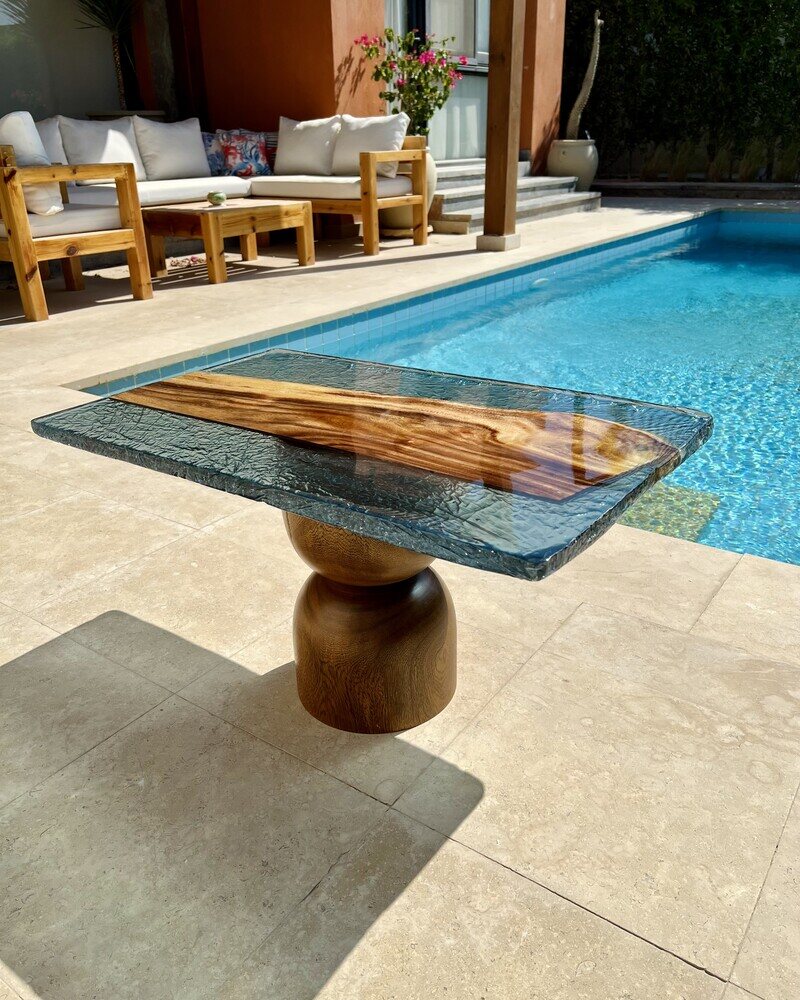
Strata
A single slab held in still water — built to be lived with.
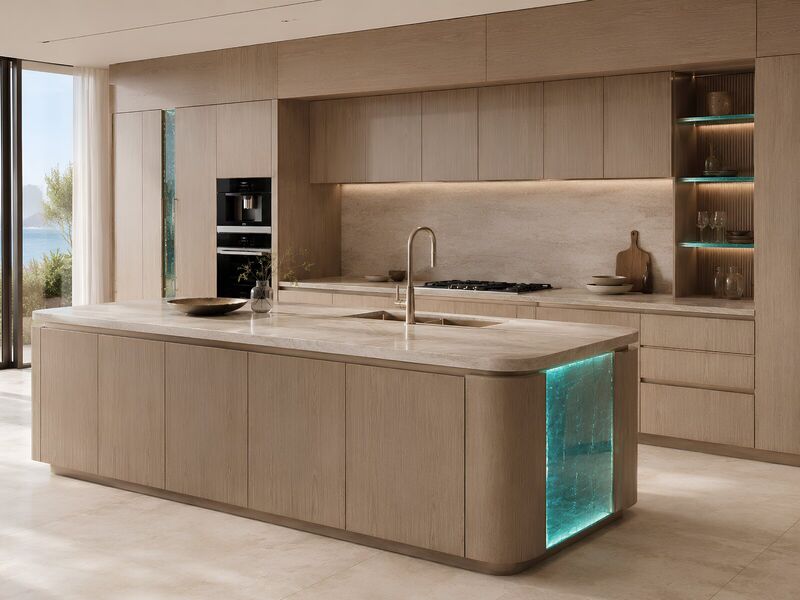
Halcyon
An oak kitchen lit from within by a cast-resin island.
See the catalogue → · Each piece is one of a kind, priced on request — the honest cost breakdown is in what a river table costs.
Common questions
How do I clean a resin table day to day?
Use a soft, slightly damp microfibre cloth and, if needed, a drop of pH-neutral soap in lukewarm water. Wipe with the grain and buff dry. Avoid abrasive pads, solvents and all-purpose sprays, which can dull or cloud the resin.
Can you put hot pans or mugs on an epoxy table?
No. Cured epoxy is a thermoset and sustained heat can leave dull rings or soft marks. Always use trivets and coasters under hot cookware, dishes and drinks, and never run a laptop or heat source directly on the surface for hours.
How do I remove scratches from an epoxy table?
Light micro-scratches usually lift with a dedicated plastic or acrylic polish worked in small circles with a soft cloth — test in a hidden spot first. Deeper scratches or heat rings need wet-sanding and re-polishing, which is best left to a finisher.
Will sunlight damage or discolour a resin table?
Prolonged direct sun can gradually shift the colour of tinted or translucent resin and add a faint amber cast, even with UV-inhibited systems. Keep the piece out of strong direct sunlight, soften window light, and rotate the table so it ages evenly.
Does the wood in a river table move or crack over time?
Timber naturally expands and contracts with seasonal humidity, which is normal and built into a well-made piece. Keeping the room at roughly 40–55% relative humidity and away from radiators and direct heat keeps that movement minimal and prevents stress.
How often does a resin table need re-polishing?
With light, consistent care many tables go years without it. Our oil-and-lacquer finishes are renewable, so the surface can be re-polished or re-coated whenever it loses its lustre or picks up deeper marks, bringing it back to as-new.
Order yours
Every piece we make is one of one — shaped around your space and a slab chosen for you. An order runs six to twelve weeks and begins with a conversation; we reply within two working days.
Start the conversation WhatsApp the atelier Email the studio See the catalogue