
Choosing your resin table colours: tint, tone and light
The colour of a resin table is not a swatch you pick from a card — it is a decision about light, depth and the wood it surrounds. Here is how we think it through, and the palette we pour by.

Clear, tinted or opaque: the first decision
Before any colour name, choose how much light the resin should let through. That single choice changes the whole character of the piece.
- Clear — water-bright and almost invisible, it reads as a glassed seam over the live edge. The wood and the river bed beneath do all the talking. Best where the slab's figure is the star.
- Tinted (translucent) — a pigment carried in a still-transparent resin, so light passes through and the colour gains depth toward the centre of the pour. This is where our work lives: it holds shadow and glow at once, like looking into shallow sea.
- Opaque — fully pigmented, light stops at the surface and the colour sits flat and saturated, a solid field of ink, milk or stone against the grain.
Most clients land on translucent, because it is the only one of the three that changes through the day. If you are still weighing the build itself, our pillar on bespoke resin tables sets the wider context.
The ASK Studio palette
We are not a paint chart — every colour is mixed by hand for one order. But certain tones recur because they suit cast resin and the light it lives in:
- Mediterranean turquoise — our signature, a clear blue-green that deepens to jewel tone where the pour is thickest. The heart of the Ondine feature wall.
- Red Sea blue-green — cooler and greyer, a smoked sea-glass that holds depth in low light without going opaque; the heart of Strata.
- Amber — warm, honeyed, translucent; it glows when backlit, as in the Vanta folding screen.
- Smoke grey — a soft, atmospheric haze that flatters pale rooms and figured walnut alike.
- Deep emerald — saturated forest green, rich against dark macassar or ziricote.
- Ink black and milk white — opaque fields for a graphic, modern seam.
A colour can also travel within one pour. Levante washes from Mediterranean turquoise to Red Sea gold across a single divider — a gradient no two castings could repeat.
How wood and light change the colour
A resin colour never exists alone — it sits against timber and is read under whatever light the room gives it. Both shift the result, so we choose colour and slab together, never in isolation.
Pale, cool woods — bleached oak, olive, paler walnut — let a turquoise or smoke tint stay crisp and bright. Dark, oily timbers like macassar ebony or ziricote pull a colour deeper and warmer; an emerald or amber gains weight against them, while a clear seam reads almost black. The live edge matters too: a ragged, sapwood-pale edge glows through a translucent pour, where a dark heartwood edge submerges like a stone underwater.
Then there is light. A translucent tint is one colour in flat morning light, another in raking afternoon sun, another again under warm lamplight at night — it is never static, which is the point. We model your table against the room's orientation and your own light before committing. To match the right timber to your colour, see the best wood for a river table.
Backlighting: amber and translucent tints
The most dramatic thing a resin colour can do is become a light source. Any translucent or tinted pour can be backlit — set against a window, or built over a concealed LED — so the resin stops reflecting light and starts emitting it.
Amber is the classic choice: backlit, it turns to molten honey, the warmth you see in the Vanta screen. Turquoise and sea-glass go luminous and aquatic, glowing like a lit pool; this is the effect behind the Halcyon kitchen, where a backlit turquoise island anchors the whole room. Emerald and smoke can be lit too, though they hold more shadow and read as a deep, lantern-like glow rather than a blaze.
Opaque colours — ink black, milk white — cannot be backlit; the pigment stops the light. So if you want a piece that performs after dark, the colour conversation and the lighting plan happen together, from the first sketch. It is one of the surest ways to make a single table own a room at night.
Custom colour: mixed once, never repeated
Every pigment blend we pour is mixed for a single order and never written down as a formula to be poured again. The resin goes down in one uninterrupted session, degassed under vacuum so it cures glass-clear and free of trapped air, and then that exact colour is gone. Your table's tone is, quite literally, one of one.
That is why we work from your room rather than a catalogue. Bring photographs, fabric and stone swatches, a sense of the light, and — if you have one — a colour you have fallen for. We translate it into a tint that suits cast resin and your chosen slab, then sample it before the full pour. A clear seam, a smoked sea-glass, a saturated jewel tone or a gradient across the whole top: all are open to you. For the chemistry that makes these colours behave, see epoxy versus resin, and to keep the colour true for years, how to care for a resin table. When you have a direction, start the conversation and we will sample it for you.
From the catalogue
Pieces from the atelier in this direction — each made to order, each with its own page.
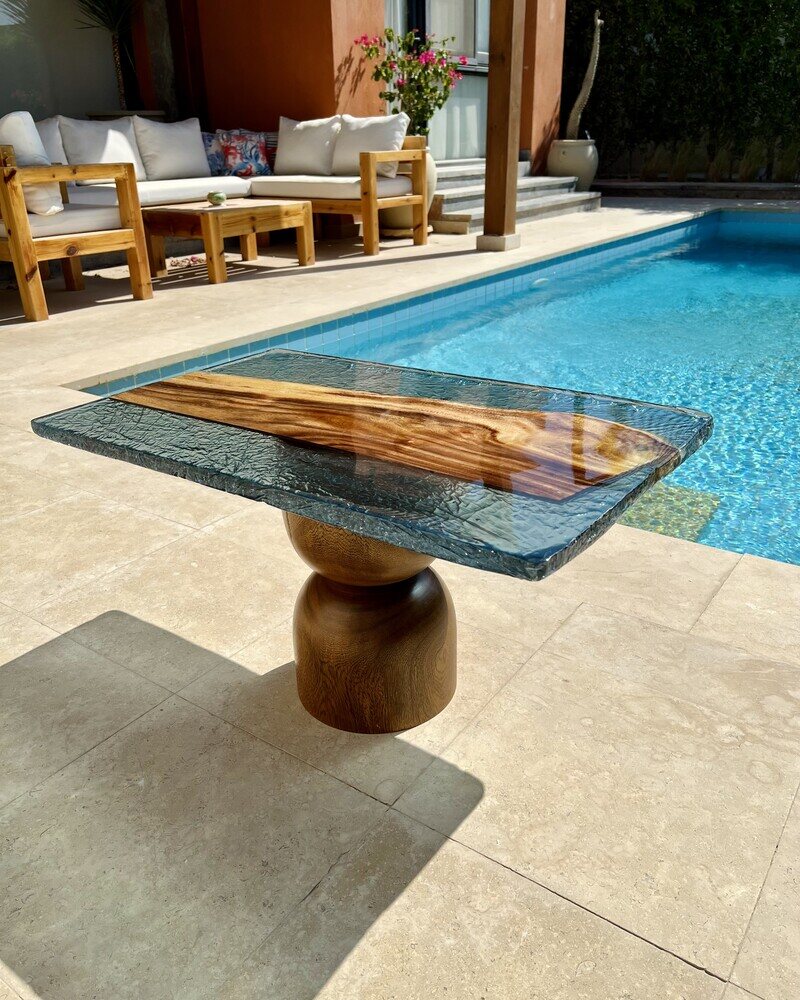 Cast resin · Walnut
Strata
A single slab, held in still water.
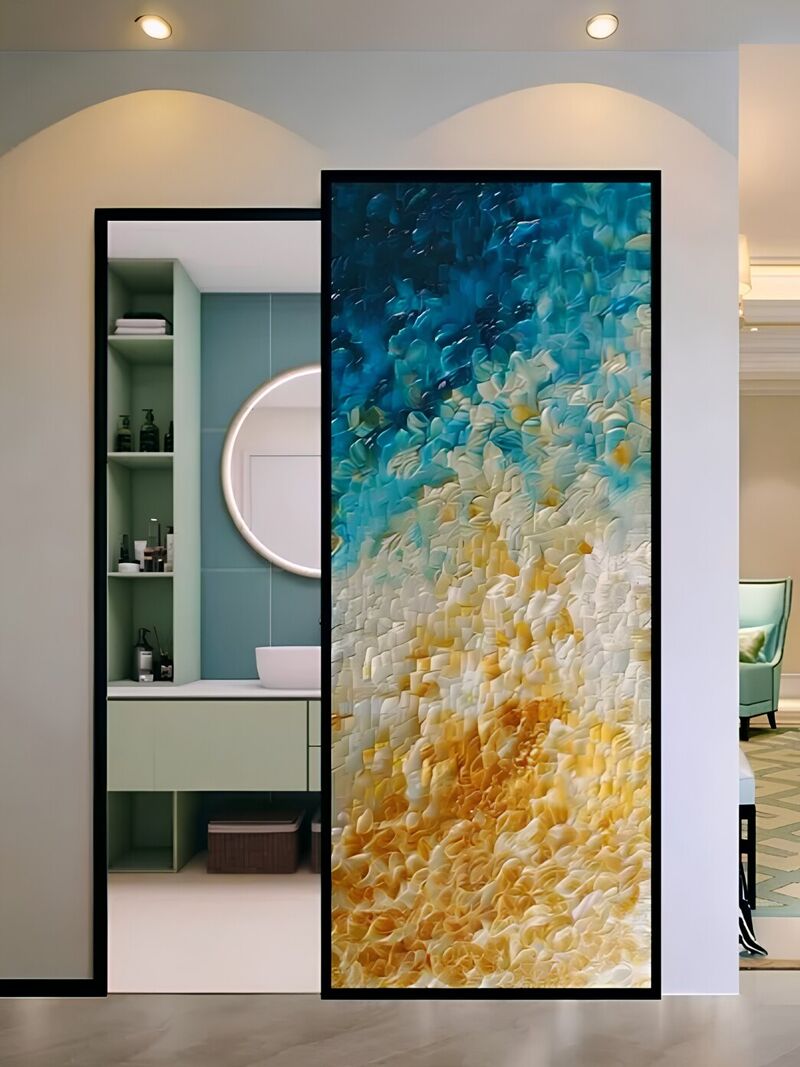 Cast resin · Steel
Levante
Two seas in a single pour — turquoise into gold.
See the catalogue → · Each piece is one of a kind, priced on request — the honest cost breakdown is in what a river table costs.
Common questions
What is the most popular resin table colour?
Turquoise leads — a clear Mediterranean blue-green that deepens to jewel tone where the pour is thickest, and the heart of our Ondine feature wall. Its cooler, greyer cousin, a smoked Red Sea sea-glass, is the heart of our Strata table and just as requested for low-lit rooms. Both are translucent, so they shift through the day rather than sitting flat.
Should I choose a clear, tinted or opaque resin table?
Choose clear when the wood's figure should lead and you want a near-invisible glassed seam; tinted (translucent) when you want colour with depth and light passing through, which is where most of our work lives; opaque when you want a flat, fully saturated field like ink black or milk white. Tinted is the only one that changes character through the day.
Can you match a resin table to a specific colour I have in mind?
Yes. Bring a swatch, a fabric, a stone or a photograph and we translate it into a tint that suits cast resin and your chosen slab, then sample it before the full pour. Each blend is mixed by hand for your order and never repeated, so the colour is unique to your table.
Does the wood change how the resin colour looks?
Considerably. Pale, cool woods like bleached oak or olive keep a turquoise or smoke tint crisp and bright; dark, oily timbers such as macassar ebony or ziricote pull a colour deeper and warmer. We choose the slab and the colour together, never separately, and model them against your room's light first.
Can a resin table be backlit?
Any translucent or tinted pour can be backlit — set against a window or built over a concealed LED — so it glows rather than reflects. Amber turns to molten honey and turquoise goes luminously aquatic, as in our Halcyon kitchen island. Opaque colours like ink black cannot be backlit, since the pigment stops the light, so we plan the lighting and the colour together.
Will the resin colour fade over time?
A properly pigmented, well-finished resin holds its colour well, but UV exposure is the main risk to any cast piece, especially over years of direct sun. We finish in oil or lacquer and advise on placement; keeping the table out of harsh, constant sunlight and following our care guidance keeps the tint true.
Order yours
Every piece we make is one of one — shaped around your space and a slab chosen for you. An order runs six to twelve weeks and begins with a conversation; we reply within two working days.
Start the conversation WhatsApp the atelier Email the studio See the catalogue