
The resin coffee table, at living-room scale
A resin coffee table is the piece a room gathers around — low, tactile, and read from above. We cast each one from a single live-edge slab and a colour mixed once, so the centre of your room is unmistakably one of one.

What changes when a resin table sits low
A dining table is read across a room and used at arm's length; a coffee table is read from directly above, at standing and seated height, every day. That single fact reshapes every decision. The grain, the live edge and the resin seam become a composition you look down into — closer to a painting laid flat than a worktop — so the figure of the slab has to reward a long, close gaze.
Scale is the other shift. A centre table is low and broad relative to its height, which means the top dominates and the base should almost disappear. We tend to float the slab on a slim steel or bronzed frame, or on a sculpted timber plinth, so nothing competes with the wood. If you are weighing this piece against a dining order, our pillar on bespoke cast-resin tables covers the full range.
Live edge coffee tables from a single slab
The most honest centre tables come from one board. Because the surface is compact, a single live-edge section — a cross-cut cookie, a short length of flitch, or a burl offcut too special to waste — carries the whole piece. We buy our walnut, ziricote, macassar and olive as whole flitches and rest them for years, then choose the one section whose figure suits a low, intimate table.
A small resin table is where a studio's offcuts earn their keep. A piece of burl with a wild, swirling eye — too busy for a three-metre dining top — becomes mesmerising at coffee-table size, where you sit with it. Working from a single slab also keeps the live edge continuous and the grain unbroken, so the table reads as a found object that was lightly tamed rather than a panel that was assembled.
Sea-glass and translucent resin
Low light falls differently on a coffee table — lamplight, a morning window, the glow of a screen — so translucency matters more here than on any other piece. We most often pour a sea-glass resin for centre tables: a smoked, semi-transparent tint, somewhere between pale turquoise and grey, that holds depth without going opaque. Look into it and you see the live edge submerged like a stone under shallow water.
Each colour is mixed once and never repeated, then poured in a single uninterrupted session and degassed under vacuum so it cures glass-clear, free of trapped air. For a river coffee table you can run the seam clear as water or saturate it to a jewel tone; for a solid cast you can let pigment pool and drift. If you want the chemistry behind the choice, see epoxy versus resin.
Proportion: getting an epoxy coffee table right
An epoxy coffee table lives or dies on proportion, because it sits in the middle of everything. A few rules we work to, then bend for the room:
- Height — we usually set the top a touch below the seat cushions of the sofa it serves, so the surface sits easy to the hand and never crowds the seating.
- Footprint — broad enough to anchor the seating group, with clear walking room around it; a centre table should feel generous, not apologetic.
- Visual weight — a thick slab wants a light, recessive base; a slender top can carry a more sculptural one.
We model each table against your sofa depth, rug and walking lines before a single cut, because at this scale a few centimetres decides whether the room flows or snags.
Pairing the table with your interior
A resin coffee table is rarely the only material in the room, so we choose the wood and tint to sit with what you already live with. Cool, pale interiors — linen, plaster, bleached oak — take a sea-glass or clear seam beautifully; warm, saturated rooms can carry an amber or deep-green resin and a darker timber like macassar or ziricote.
It need not stand alone, either. A centre table can echo a larger piece in the same scheme — a feature wall, a pivot door, a folding screen — so the materials speak to each other across the room. We often draw a coffee table and a resin wall piece from the same flitch and the same pigment batch, a pairing you cannot buy off a shelf. Bring photographs, swatches and a floor plan, and we design the table into the room rather than onto it.
Lead time, delivery and cost
Every centre table is made to order in our atelier on the Red Sea and delivered worldwide — to private residences, yachts and hospitality projects. An order runs six to twelve weeks: the resin alone cures roughly three weeks before the first cut, and we will not rush that. We reply to inquiries within two working days.
Cost follows the same drivers as any cast piece — the rarity and size of the slab, the resin volume and finish, the base, and shipping — though a coffee table's compact footprint usually makes it the most accessible way to own one of our pieces. We never quote from a list; we quote the table. For how the numbers move, see what a river table costs, then start the conversation when you are ready.
From the catalogue
Pieces from the atelier in this direction — each made to order, each with its own page.
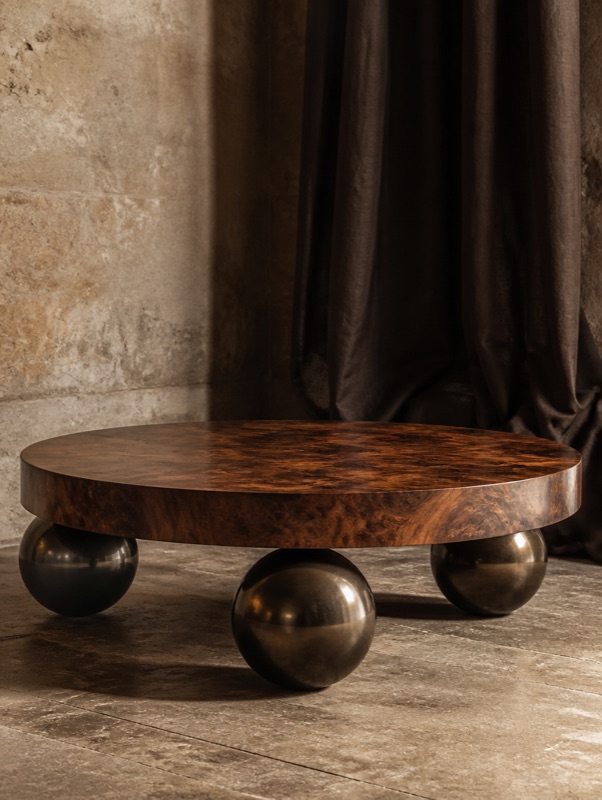 № 07 · Coffee table
Atlas
A burled-walnut centre table set down on three polished bronze spheres.
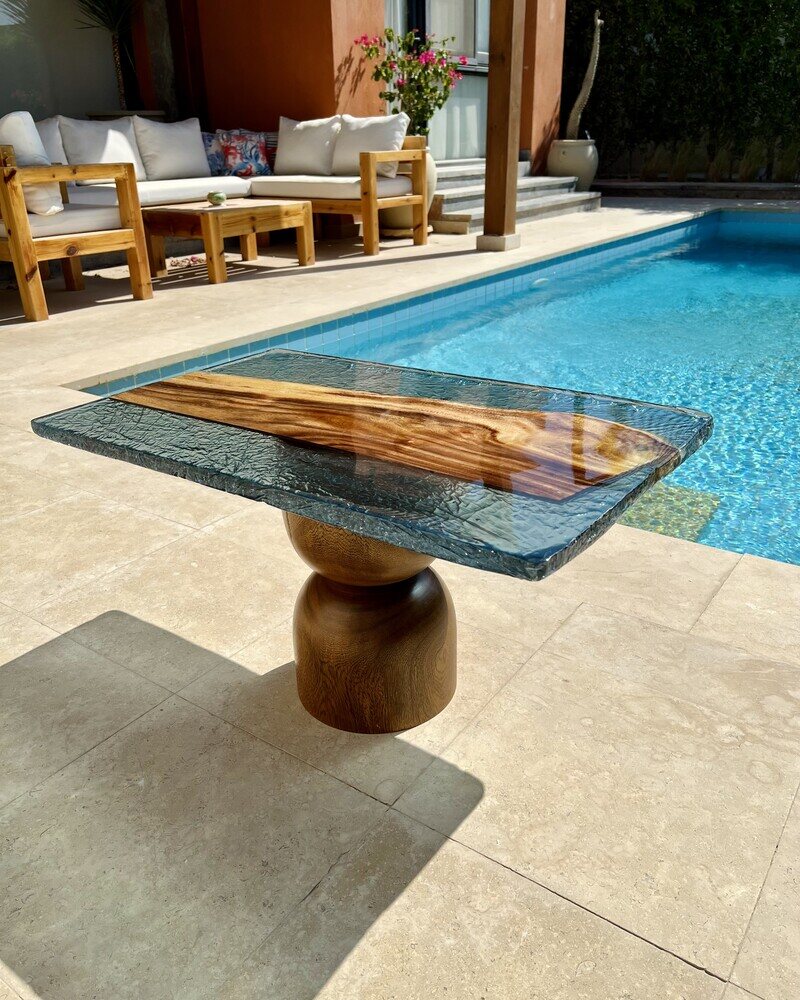 № 01 · River table
Strata
A single walnut slab, held in still sea-glass cast resin.
See the catalogue → · Each piece is one of a kind, priced on request — the honest cost breakdown is in what a river table costs.
Common questions
What is a resin coffee table?
It is a low centre table made by casting tinted epoxy resin with a slab of solid wood — either as a translucent seam between live edges (a river coffee table) or as a solid cast top. Because it is read from above every day, the wood's figure and the resin's translucency carry the whole piece.
How big should a resin coffee table be?
Aim for a top a little below the seat height of your sofa, broad enough to anchor the seating group with clear walking room around it. We model each table against your sofa, rug and walking lines before cutting, since a few centimetres decides whether the room flows.
Can you make a small resin coffee table from a single slab?
Yes — a compact centre table is the ideal home for one exceptional live-edge section or a wild burl offcut. Working from a single slab keeps the live edge continuous and the grain unbroken, so the table reads as one found object rather than an assembled panel.
What resin colour works best for a coffee table?
Sea-glass — a smoked, semi-transparent tint between pale turquoise and grey — is our most-requested choice, because it holds depth in low lamplight without going opaque. You can also run a river coffee table clear as water or saturate the seam to a jewel tone; across the full range of resin colours and tints, each colour is mixed once and never repeated.
How long does a bespoke resin coffee table take?
Six to twelve weeks. The resin alone cures about three weeks before the first cut, and the wood is chosen from flitches we have rested for years. We reply to inquiries within two working days and deliver worldwide.
Is a coffee table cheaper than a resin dining table?
Usually, yes — its compact footprint means a smaller slab and far less resin, so a centre table is often the most accessible way to own one of our cast pieces. Cost still follows the slab's rarity, the finish and the base, so we quote each table rather than work from a price list.
Order yours
Every piece we make is one of one — shaped around your space and a slab chosen for you. An order runs six to twelve weeks and begins with a conversation; we reply within two working days.
Start the conversation WhatsApp the atelier Email the studio See the catalogue