
River tables, explained.
A river table holds a seam of cast resin between two live-edge slabs of wood — a still river running through timber. Here is what that actually involves, and what to weigh up when you order one.

What a river table is
Take a tree trunk and cut it lengthwise into slabs. Keep the two outer boards — the ones whose inner faces mirror each other — and turn them outward, so their natural, bark-shaped edges face one another across a gap. Fill that gap with tinted, transparent resin. The result reads like an aerial view of a river: timber banks, water between. It is one kind of epoxy resin table, and the most recognisable.
The form rewards honesty. Because the wood's live edge is the river bank, the figure of the particular tree decides the table's character — no two trunks, and therefore no two rivers, can ever match.
How a bespoke river table is made
At our atelier the sequence is deliberate and slow:
- The wood comes first. We buy ziricote, macassar and burled walnut as whole flitches — the complete sequence of slabs from one trunk — and rest them for years, not days. We cut around the figure, never through it. More on live-edge slabs.
- One uninterrupted pour. The resin is tinted with pigments we mix once and never repeat, then poured in a single session and degassed under vacuum so it cures glass-clear, without trapped air. The difference between casting and coating resin is explained in epoxy vs resin.
- Three weeks before the first cut. Resin keeps moving as it cures. We leave it for three weeks before machining, so the surface you live with stays true.
- Finished in coats, not shortcuts. Sanding through the grits, then oil or lacquer built up coat by coat until the wood reads deep and the river reads wet.
Choosing the wood
Dark, figured species frame a resin river best. Walnut burl swirls and knots around the seam; ziricote draws sharp, ink-line grain; macassar stripes formally, like a pinstripe suit. Lighter timbers can work, but they flatten the contrast that makes the river read as water. We help you choose in our guide to the best wood for a river table.
Choosing the river
The resin can run clear as glass, smoked like sea-glass, or saturated to a deep colour. Three decisions matter more than the colour itself:
- Transparency — a translucent river shows the live edge through the resin, like a riverbed; an opaque one reads as cut stone.
- Width and wander — a narrow seam is quiet and architectural; a broad river becomes the table's whole subject.
- Surface — dead-flat polish for formality, or a gently rippled top that catches light the way moving water does.
The same choices apply whether you are ordering a dining table or a lower coffee table.
Living with one
A finished river table is robust, but it appreciates the same care as any fine furniture: keep it out of prolonged direct sun, wipe with a soft, slightly damp cloth rather than abrasives, and give very hot vessels a trivet. Wood keeps breathing with the seasons; the resin holds it gracefully. The full routine is in how to care for a resin table.
There is a longer view, too. A piece cut from a single whole flitch and made to order is built to be lived with for a generation, then re-sanded and re-finished decades on — the same slab, brought back to its first depth. Catalogue furniture is made to be replaced; this is made to be kept, and that is where its value sits.
What a river table costs
Price follows the piece: the size and rarity of the slab, the volume and tint of resin, the river's form, the finish and the base, plus crating and worldwide delivery. We quote each order individually — the honest breakdown of the drivers is in what a river table costs. Pieces are made to order in Egypt; see how we work locally and globally in resin furniture in Egypt.
From the catalogue
Pieces from the atelier in this direction — each made to order, each with its own page.
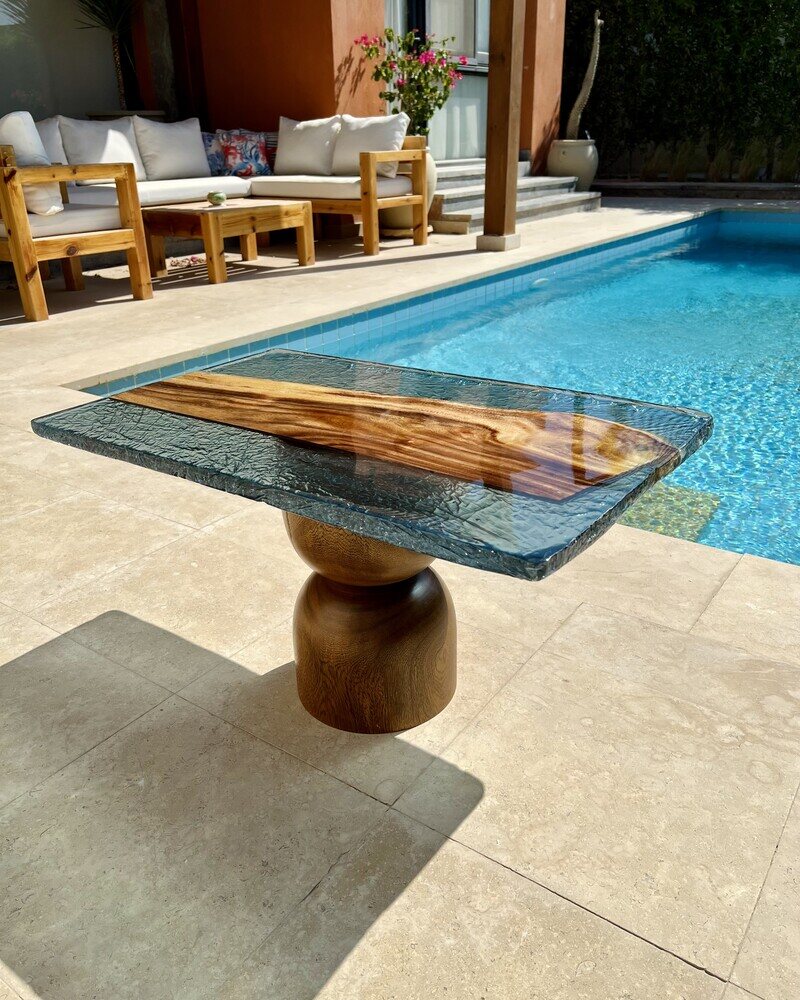
Strata
A single slab, held in still water — cast resin and walnut.
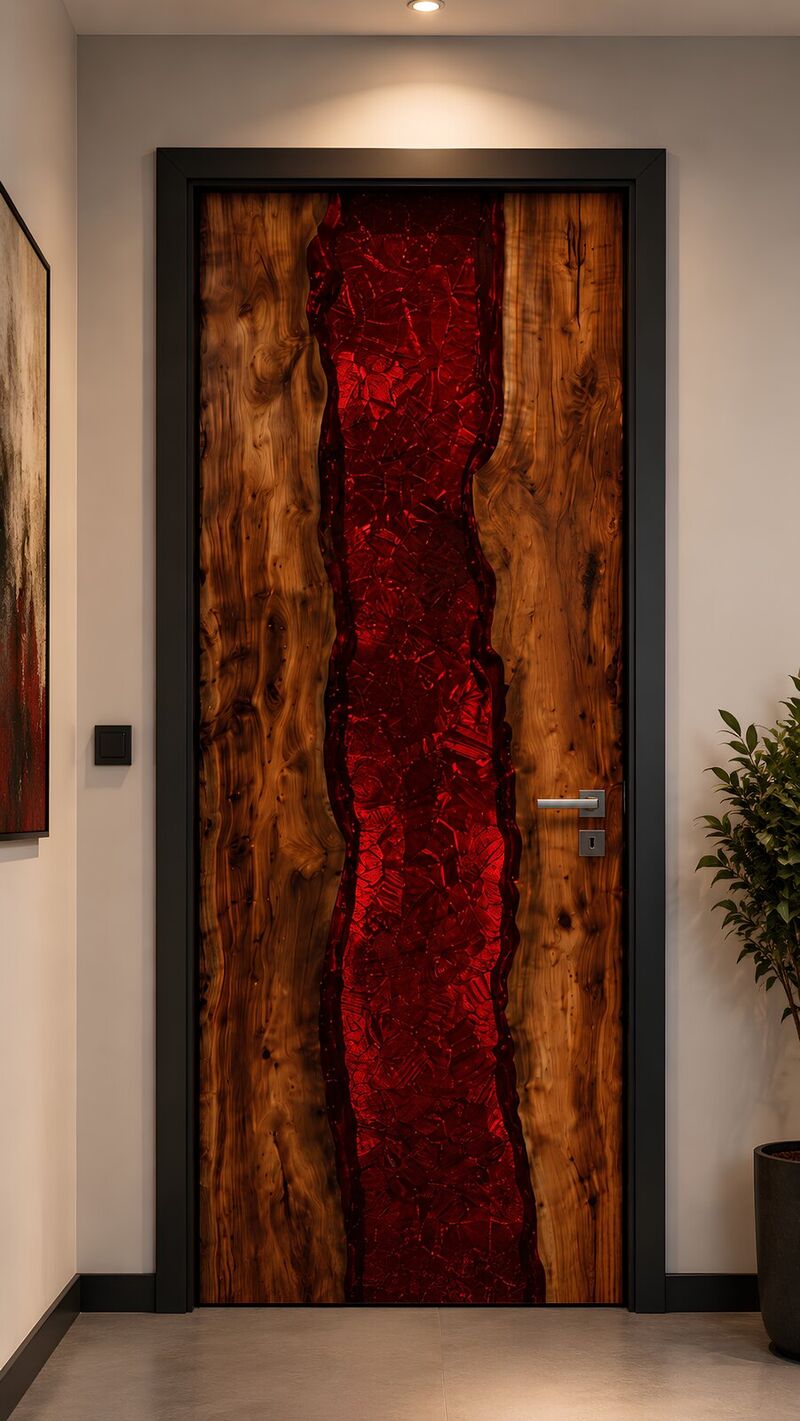
Carmine
The river seam, hinged — a garnet vein of cast resin in walnut burl.
See the catalogue → · Each piece is one of a kind, priced on request — the honest cost breakdown is in what a river table costs.
Common questions
What is a river table?
A river table is a table where a seam of tinted, transparent resin is cast between two live-edge wood slabs, so the resin reads like a river running between timber banks. Each one is unique because the wood’s natural edge shapes the river.
How is a bespoke river table made?
The wood is chosen from whole flitches and rested for years, then walled into a mould; the resin is tinted, poured in a single session and degassed under vacuum, cured for about three weeks, then levelled, sanded and finished in oil or lacquer.
How long does a river table take to make?
At ASK Studio a river table order typically runs 6 to 12 weeks, because the resin must cure slowly—around three weeks—before it can be cut and finished.
What wood is best for a river table?
Dark, figured species frame a resin river best—burled walnut, ziricote and macassar ebony—while olive offers a calmer, golden character. See our guide to choosing the wood.
Are river tables durable?
Yes. A cured resin surface is hard, non-porous and water-resistant, built for everyday use. Protect it from prolonged direct sun and direct heat, and it will last for decades.
Are river tables worth it?
For a piece you intend to keep, yes. A bespoke river table is cut from a single whole flitch, made to order and built to last a generation — and because it is solid wood and cast resin rather than veneer, it can be re-sanded and re-finished decades on. Catalogue furniture is priced to be replaced; a one-of-one slab is an heirloom that holds its character and its worth.
Do river tables crack or warp over time?
Not when they are made properly. We rest whole flitches for years so the wood reaches a stable moisture content before it is touched, then pour the resin in a single degassed session and cure it slowly — about three weeks — before the first cut. Stabilised slabs and a controlled pour are what keep the top true; the wood still breathes with the seasons, and the resin holds it gracefully.
River table vs solid wood slab — which should I choose?
A solid wood slab is quieter and lets one timber speak for itself; a river table pairs two live edges across a seam of cast resin for more drama and a sense of depth. The wood you pick matters either way — our guide to the best wood for a river table covers species and figure, and epoxy vs resin explains the casting resin that makes the river possible.
Waterfall edge vs river table?
They solve different things. A waterfall edge is a joinery detail — the grain folds down at the corner so the top continues seamlessly into the leg. A river table is about the surface itself, where resin runs between two live-edge banks. You can have both, but most pieces lead with one idea; a river table makes the top the subject.
Order yours
Every piece we make is one of one — shaped around your space and a slab chosen for you. An order runs six to twelve weeks and begins with a conversation; we reply within two working days.
Start the conversation WhatsApp the atelier Email the studio See the catalogue